A reading of the work
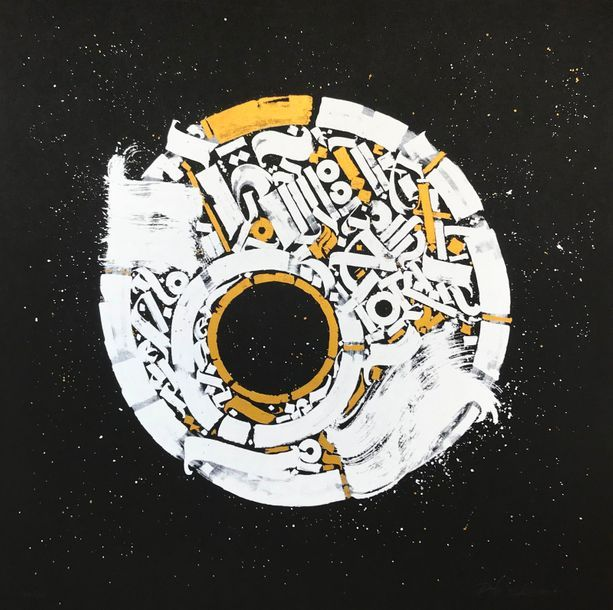
In this work, the artist explores the balance between the discipline of writing and the freedom to transform it. Manual precision coexists with experimentation drawn from graffiti and graphic design. Letters and signs take on value as forms that can create movement within a static image. The balance named in the title can be understood as the relationship between the impulse to write and the control that gives it structure. Tradition remains present in the gesture, while the forms open into a contemporary visual language.
This connection between past and future gives meaning to the idea of calligrafuturism. Lampas brings together influences from different writing traditions to imagine how calligraphy might evolve. From this perspective, the meeting of cultures is expressed through the coexistence of their graphic forms. Viewers can attend to the rhythm and direction of the strokes even without deciphering the letters. The work therefore invites a reading about the possibility of sharing a visual experience across different languages and histories.
The artist and his practice
Pokras Lampas was born in Korolyov, near Moscow, in 1991. His practice began with graffiti and graphic design. In 2015 he created a calligraphic intervention on the roof of the former Red October factory in Moscow. In 2017 he made a work on the roof of the Palazzo della Civiltà Italiana in Rome. These projects brought writing into architectural space and placed it in relation to the scale of the city.Opera Gallery Gulf News
Describing his method, Lampas explains that he prepares the composition and calculates the width of the tool according to the space and rhythm. He tests how the surface and the tool respond, leaving room for improvisation during execution.MADE IN BED
In his collaboration with Rei Kawakubo, Lampas valued the freedom to choose his texts. He was interested in seeing how the designer found new meanings in his work. His account shows the importance he places on exchange and the artist’s autonomy.Izba Arts

 View the full image