The original painting
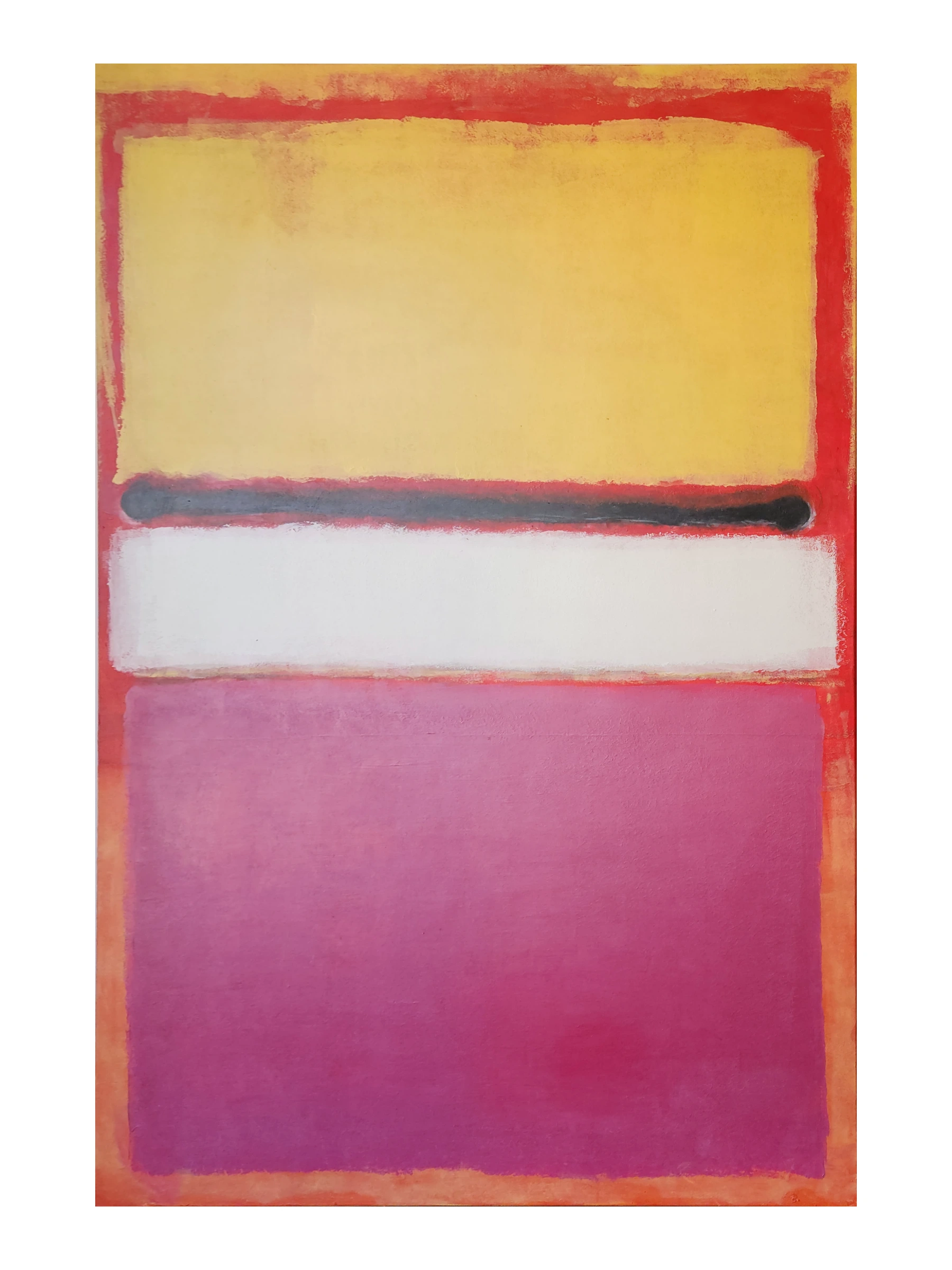
Sotheby’s catalogue identifies the original, White Center (Yellow, Pink and Lavender on Rose), as a 1950 oil-on-canvas painting measuring 205.8 × 141 cm. It passed from Sidney Janis Gallery to Eliza Bliss Parkinson, then returned to Janis in 1960. David Rockefeller acquired it that June; it was the first abstract work in his collection.
Reading the original
In White Center, the intensity of colour combines with rigorous restraint. Gold, red and lilac create a sensual, almost bodily impression, contained by white and black and by the rectangular order of the composition. In this combination, art historian David Anfam sees the tension of restrained desire. The canvas’s outward balance holds a powerful experience, preserving its intensity within strict boundaries.
Another theme of the painting concerns emptiness and the sense of infinite space. Anfam relates the light areas of White Center, which seem to fade away, to emptiness in Romantic art. Beside them, colour retains its density and material presence. What seems close and tangible coexists with a space whose limits are difficult to imagine. Through this relationship, Anfam explores Rothko’s desire to bring together the finite and the infinite and to give abstract space a human dimension.
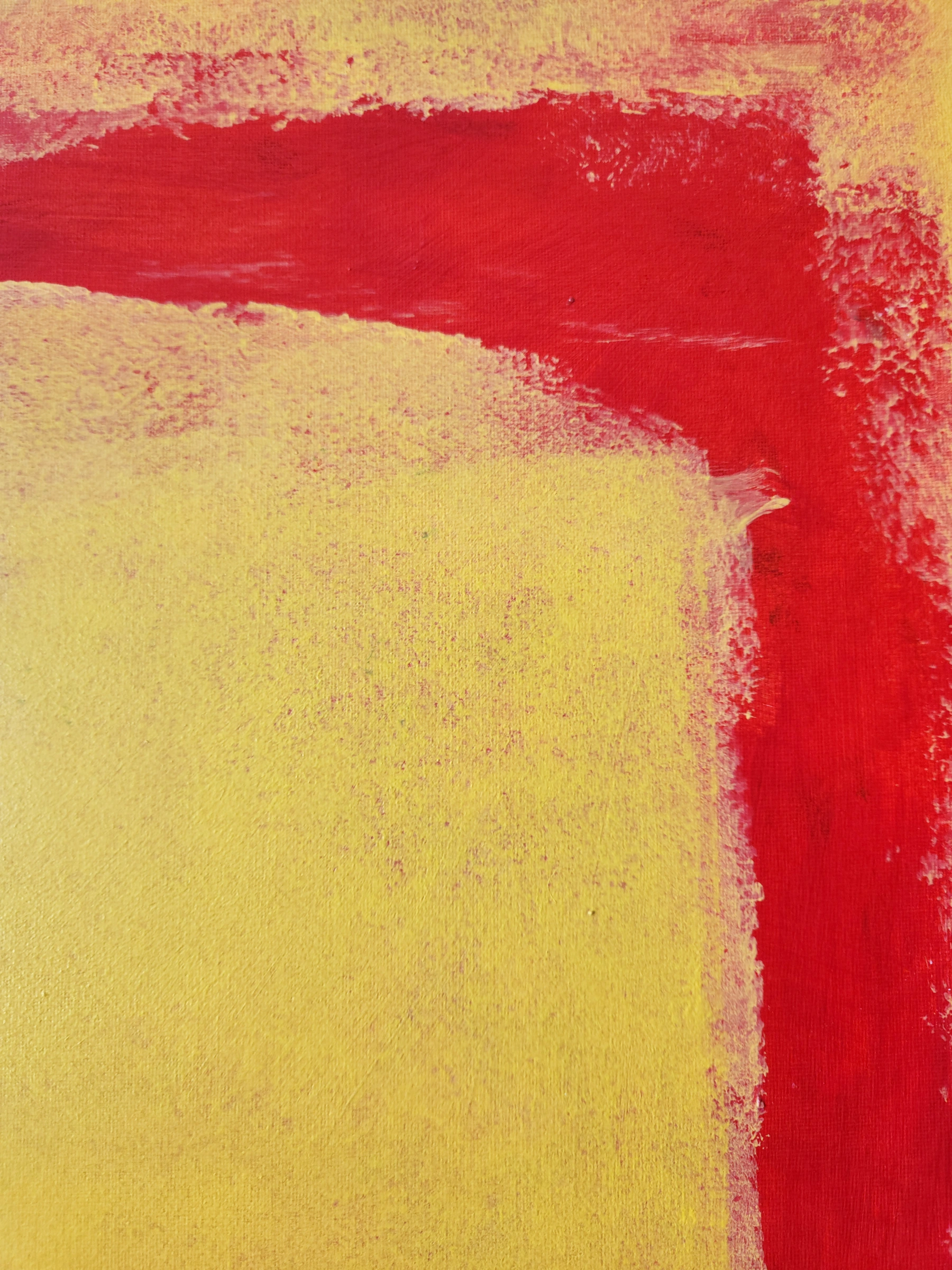
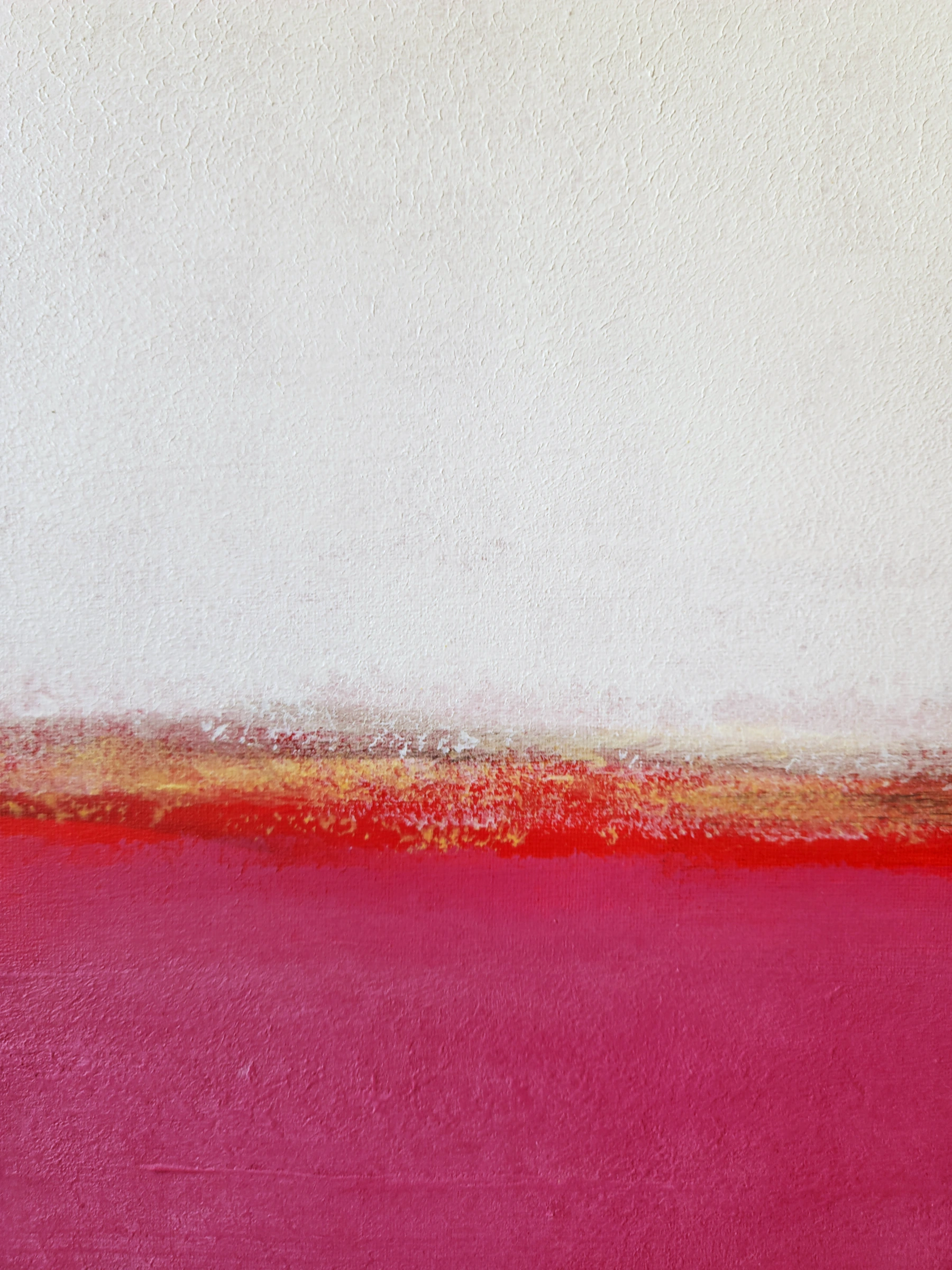
With close attention, this duality becomes visible in the painting itself. At the bottom, the orange ground is thinned in places almost to the point of disappearance; higher up, it becomes a red glow around the colour fields. Differences in the edges and the density of the paint disrupt the apparent symmetry. The forms acquire weight and seem to lose it at once, leaving the viewer between sensations of presence and disappearance. Through this mutability, White Center joins the immediate power of colour with an experience of the visible world’s instability. Based on David Anfam’s analysis in the Sotheby’s catalogue.